
What is Fertility Preservation?
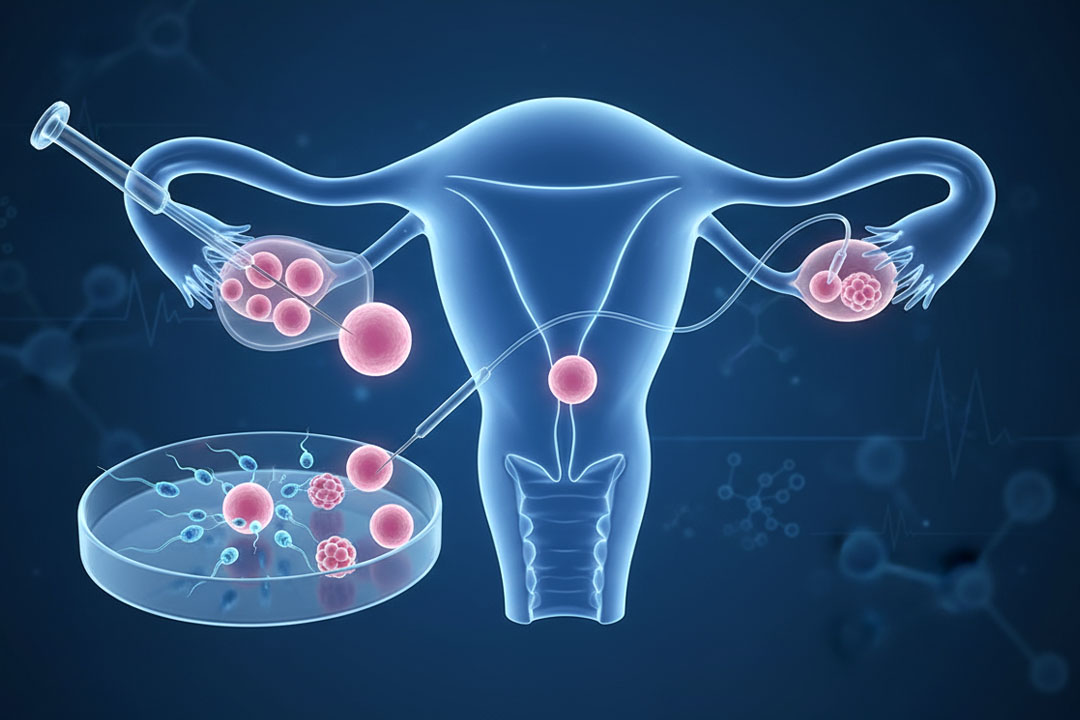
Fertility preservation is the process of freezing eggs, embryos, or sperm so they can be used for future family building. Modern vitrification (flash-freezing) technology has revolutionised outcomes — frozen eggs and embryos now achieve survival and pregnancy rates comparable to fresh cycles.
Dr. Unnati Mamtora offers comprehensive fertility preservation counselling and treatment for women and couples who wish to protect their reproductive potential — whether due to a medical diagnosis, personal circumstances, or simply the desire to keep options open for the future.
Preservation Options
Egg Freezing (Oocyte Cryopreservation)
Mature eggs are retrieved after ovarian stimulation and vitrified for long-term storage. The preferred option for single women or those without a partner. Stored eggs can be thawed and fertilised years later.
Embryo Freezing
Eggs are fertilised with sperm before freezing, creating embryos that are vitrified and stored. Preferred by couples or women with a known sperm source. Offers the highest thaw-survival rates of all preservation methods.
Sperm Freezing
Men facing cancer treatment, surgery, or other conditions affecting sperm production can bank sperm for future use in IUI, IVF, or ICSI cycles.
Elective (Social) Freezing
Women who are not yet ready for parenthood — due to career, relationship, or personal reasons — can freeze eggs at their current age, preserving the genetic quality of eggs before natural decline occurs.
The Egg Freezing Process: Step by Step
Initial Consultation & Testing
Ovarian reserve is assessed via AMH blood test and antral follicle count to estimate the likely number of eggs retrieved and plan the stimulation protocol.
Ovarian Stimulation
Daily hormone injections over 10–14 days stimulate multiple follicles to develop. Progress is monitored with regular ultrasound scans to time the trigger injection precisely.
Egg Retrieval
A short procedure under sedation. A fine needle guided by ultrasound aspirates the eggs from the follicles. Patients return home the same day and resume normal activity within 24–48 hours.
Vitrification
Mature eggs are rapidly frozen using vitrification — a flash-freezing technique that prevents ice-crystal formation and preserves the egg's integrity for years without quality loss.
Secure Storage
Eggs are stored in liquid nitrogen at −196 °C in clearly labelled cryo-tanks with strict chain-of-custody protocols, for as long as needed.
Future Use: Thaw & Transfer
When you are ready, the eggs are thawed, fertilised via ICSI, and the resulting embryo(s) are transferred in a frozen embryo transfer (FET) cycle.
Who Should Consider Fertility Preservation?
- Women diagnosed with cancer who need chemotherapy or pelvic radiotherapy
- Women facing surgery that may affect ovarian function (e.g. ovarian cyst removal, endometriosis surgery)
- Women with a family history of premature ovarian failure or early menopause
- Women with genetic conditions that may accelerate ovarian ageing
- Women delaying childbearing for career, education, or personal reasons (elective freezing)
- Couples who produce surplus embryos during an IVF cycle and wish to store them for future use
- Men facing medical treatment that may impair sperm production